Thistles, Knapweeds and Allies
What are they?
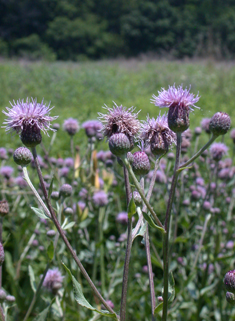
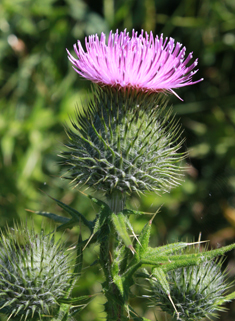
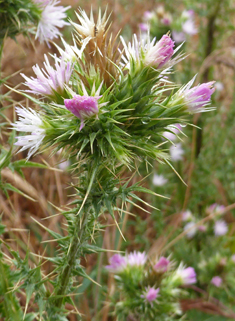
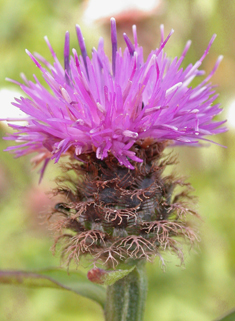
Thistles will be familiar to everyone and few people cannot have inadvertently brushed past one (or sat on one at a picnic!) and felt its wrath! These are members of the large Asteraceae family and this is apparent from the flowers, which typically consist of a bundle of few to many, small florets, bundled together to form a compound flowerhead. In most species, the leaves, stems and outer parts of the flowerheads all carry often formidable-looking spines, but there are also some with less fierce armament.
Where are they found?
There seems to be a thistle for every occasion, with most habitats holding one or two species, so habitat can help a little towards identification. But most species will be found in disturbed, nutrient-rich habitats or in permanent grasslands.
Identification
The shape of the leaves and the arrangement of their spines is important, while the presence or absence of spiny wings on the stems can also be useful. As with most members of the Asteraceae, the appearance of the phyllaries - the green, outer part of the flowerhead - is important and these should always be checked. Note that most species can sometimes produce plants with white flowers, though they seem to be particularly frequent in Marsh Thistle.
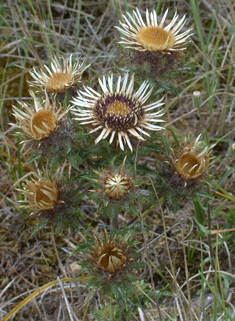
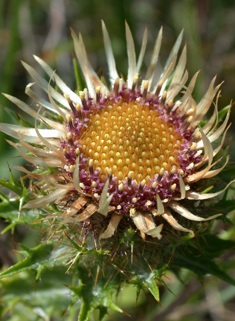
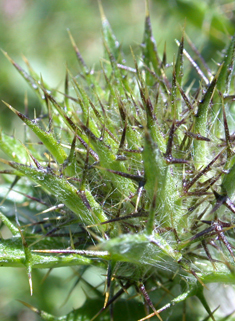
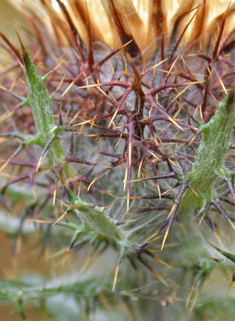
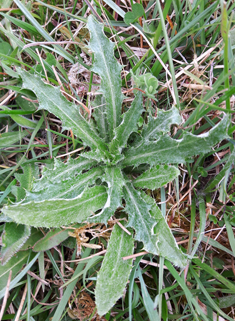
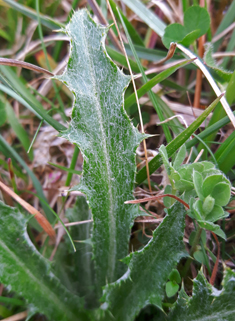
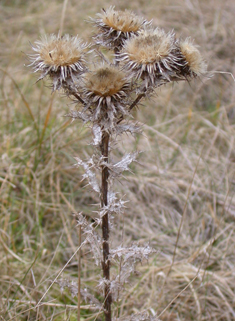
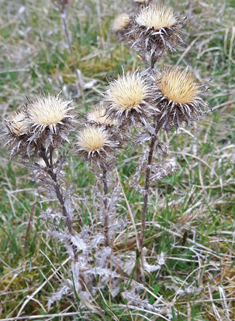
Common Carline Thistle Carlina vulgaris
Has been recorded in the past but not known to be currently present on the islands and past records may perhaps be in error. Flowers July to October. A small plant, to no more than 60cm in height. Flowerheads have a ring of straw-coloured, petal-like bracts that stiffen and remain attached throughout the winter, long after the flowers have set seed. The florets themselves are yellowish in bud, opening with dark purple petals. Phyllaries intricately divided into narrow fingers with spiny tips.
 |
 |
 |
 |
| |
|
|
|
 |
 |
 |
 |
| |
|
|
|
Lesser Burdock Arctium minus
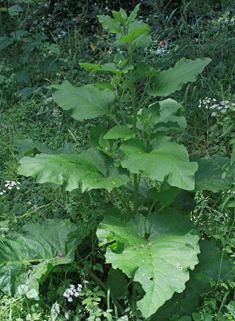
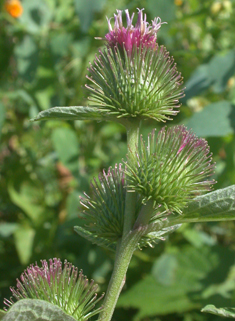
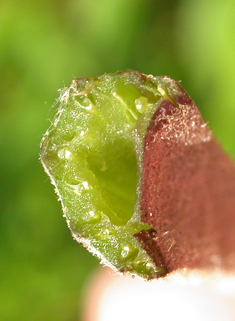
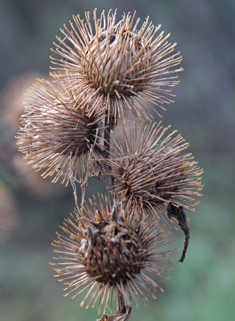
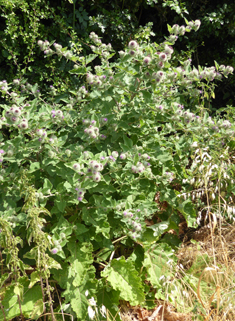
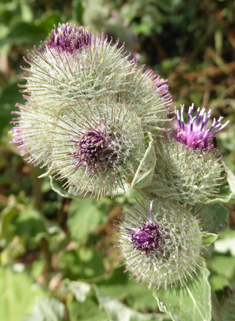
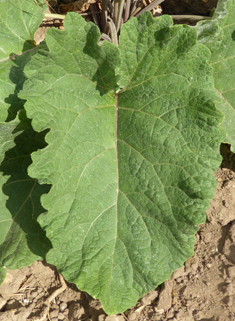
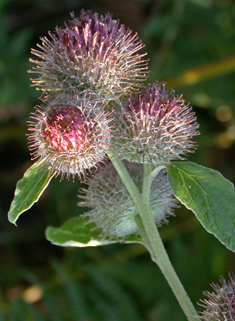
Native. Common on the inhabited islands. Flowers July to September. Petioles (stalks) of the basal leaves are hollow inside and usually not strongly grooved on the upper side. The flowerheads have short stalks and are thus arranged in a spike-like way rather than forming flattened heads. Phyllaries hairless or nearly so in the subspecies minus but densely webbed with hairs in subspecies pubens. Typically, pubens has longer flower stalks than minus, but many plants are intermediate and difficult to assign to subspecies.
In the photos below, the first row shows subspecies minus while the second row is typical of subspecies pubens. Records on the Isles of Scilly are not always taken to the subspecies level, but A. minus subsp. minus has been recorded.
 |
 |
 |
 |
| |
|
|
|
 |
 |
 |
 |
| |
|
|
|
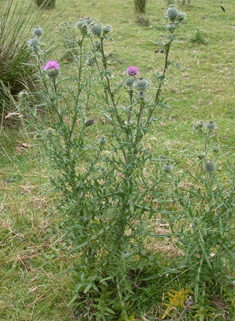
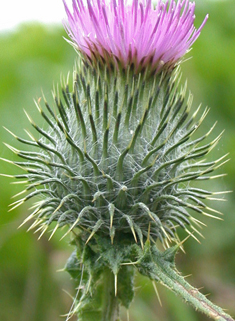
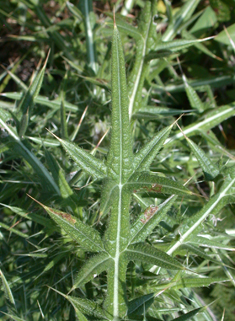
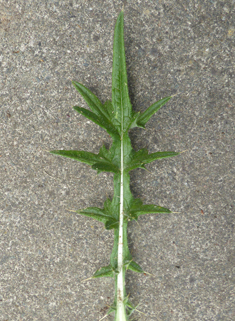
Spear Thistle Cirsium vulgare
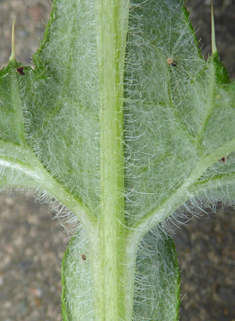
Native and found commonly throughout most of the islands. Flowers late June to September. A strong-growing, stout and often multi-branched species with long, stout spines. Flowerheads large and form perhaps the 'classic' thistle. Phyllaries curved and spreading, with long, sharp, spiny tips.
 |
|
 |
| |
|
|
 |
 |
 |
| |
|
|
Marsh Thistle Cirsium palustre
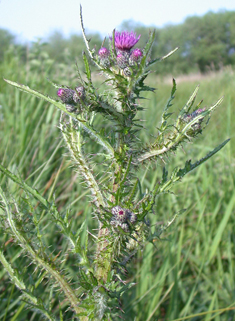
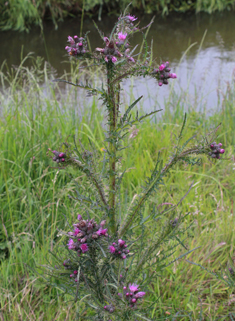
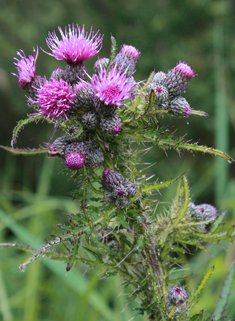
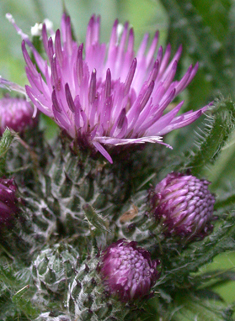
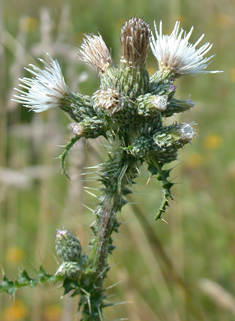
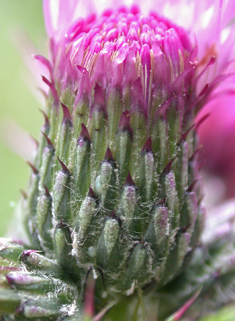
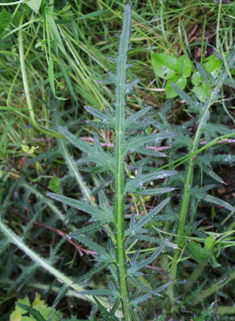
Native. Rare on the islands with records only in damp ground on St Mary's. Flowers late June to September. Plants form dense-leaved, basal rosettes before sending up a flowering stem, with leaves usually heavily purple-tinted. Flowers deep purple but occasionally white. Phyllaries tightly pressed to the flowerhead with just the prickly tips bent outwards.
 |
 |
 |
 |
| |
|
|
|
 |
 |
 |
 |
| |
|
|
|
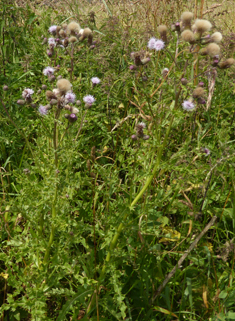
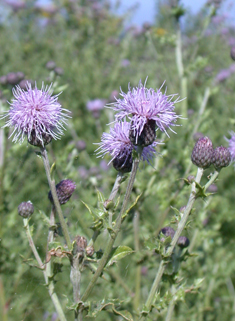
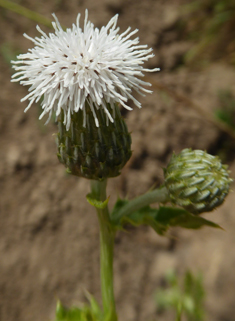
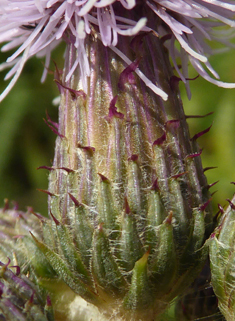
Creeping Thistle Cirsium arvense
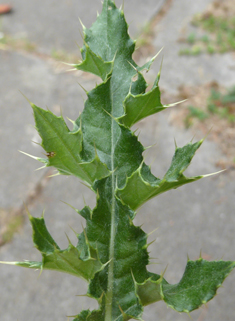
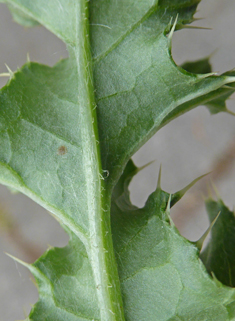
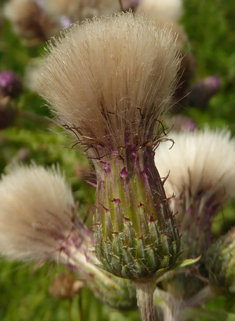
Native and quite widespread in rough places on the inhabited islands. Flowers late June to September. A persistent and deep-rooted perennial that forms spreading colonies of close-growing, upright stems. Flowers a paler lilac colour than most thistles. Phyllaries tightly pressed to the flowerhead with just the prickly tips bent outwards.
 |
 |
 |
 |
| |
|
|
|
| |
 |
 |
 |
| |
|
|
|
Slender Thistle Carduus tenuiflorus
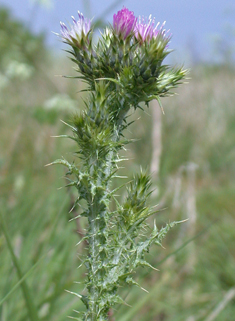
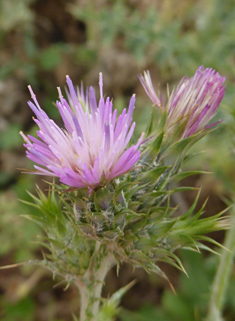
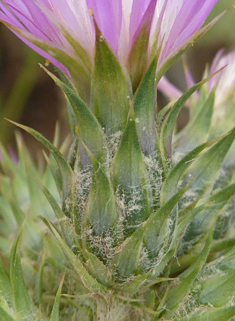
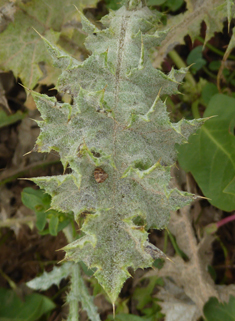
Native. Formerly considered common on the islands but appears to be uncommon now with most records from Tresco and St Martin's. Flowers June to August. A slender, very spiny plant often with a greyish cast to the leaves and stems. Flowers relatively small, pale pink to whitish in colour. Phyllaries spreading, broad-based and spiny.
 |
 |
 |
 |
| |
|
|
|
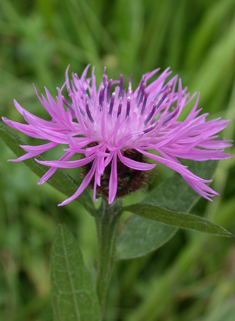
Common Knapweed Centaurea nigra
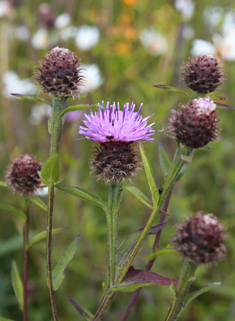
(Black or Lesser Knapweed) Native and perhaps introduced. Scattered here and there in grassy places on the inhabited islands. Flowers June to September. The basal part of the flowerhead is relatively broad and rounded in outline and the phyllaries overlap strongly, such that their greenish bases are difficult to see in the lower half of the flowerhead. Occasionally the flowers have 'rayed' forms which resemble Greater Knapweed but can be told from each other by their leaves; such plants seem to be typically from introduced seed mixes. Leaves are variable and may be simple or deeply toothed or lobed.
Note: The situation with Slender and Common Knapweeds is greatly confused and problematic. Many references now split these as two separate species (which I have followed here), but this recent decision seems largely to be based on the opinion of a single, non-peer reviewed publication, which itself is based on the thoughts of a single observer in one small part of the country. In truth, the great majority of these knapweeds are intermediate between the two extremes and are doubtfully identifiable as either Slender or as Common Knapweed. This situation has perhaps come about through the abundant introduction of non-native plants which has resulted in a mass of hybrid forms. Many plants are perhaps best called Common Knapweed with the understanding that this name best represents an aggregate of forms involving both Centaurea debeauxii and C. nigra.
 |
|
 |
 |
| |
|
|
|
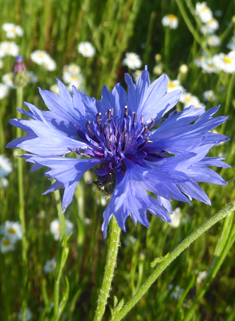
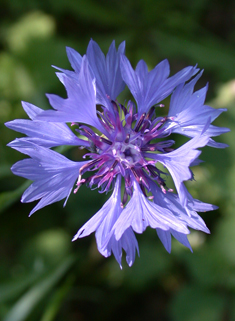
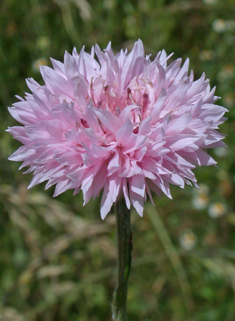
Common Cornflower Centaurea cyanus
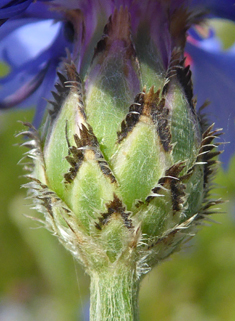
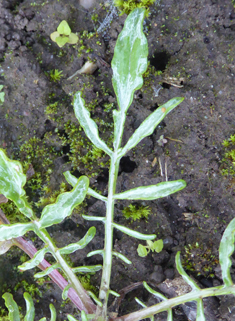
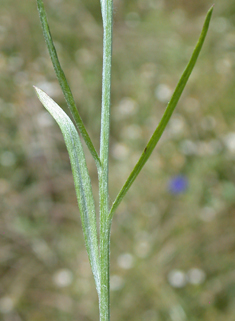
(Cyanus segetum) An ancient introduction to the UK from mainland Europe. A handful of records in gthe past, probably all involving garden escapes. More recently, plants may occur as components of so called 'wildflower mixes'. Flowers June to August. Flowers rich blue but seed mixes often select in favour of other colours and pink, dark purple, plae blue and white are often seen. Stems thin and whispy with narrow leaves, all clothed in flattened, silvery-white hairs.
 |
 |
 |
 |
| |
|
|
|
 |
 |
||
| |
|
Chicory Cichorium intybus
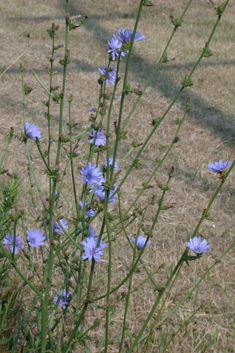
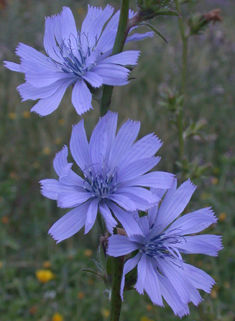
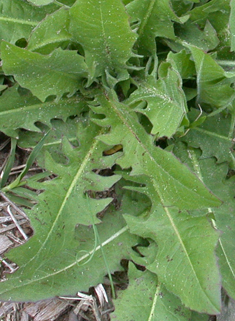
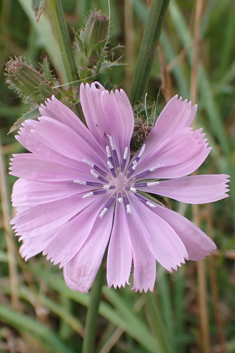
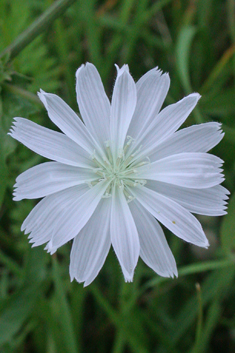
Originally introduced from Europe, perhaps in the Middle Ages, but now well established in rough, grassy places and roadsides. Flowers July to September. Plants to 100cm tall with a rosette of basal leaves that resemble those of some of the hawk's-beards. The flowerheads usually appear a few at a time on upper side branches of the main stem. The branches gradually elongate as later flowers open. Flowerheads are typically bright, pale blue, but may rarely be white or pink.
 |
 |
 |
 |
| |
|
|
|
 |
 |
 |
|
| |
|
|