Ragworts, Fleabanes & Allies


What are they?
Ragworts and fleabanes form a group of often showy, usually yellow-flowered members of the daisy and dandelion family - the Asteraceae. Their flowers differ from those of the dandelions in having strap-like petals or 'rays' around the outside of the compound flowerhead only, with the small florets in the centre being petalless and forming a button-like middle. Flowers can confuse at times as the centres start yellow but turn brownish as they age. These plants are mostly herbaceous (although some are woody perennials) but the stems become woody as they mature during the summer and their remains can often still be found through the winter and into the following spring. The plants tend to be multistemmed and the flowers are carried in relatively large clusters on many-branched stems.
Where are they found?
Native species are generally plants of open, usually grassy places while introduced species are more likely to be found in cultivated ground or close to human habitation.
Identification
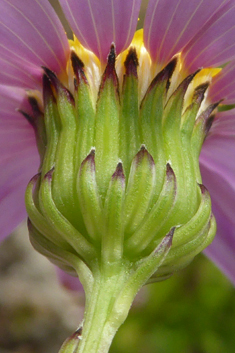
The ragworts can seem all rather similar at first, but a combination of leaf detail and a close look at the phyllaries (the green bracts around the base of the flowerhead), together with habitat type, should make identification relatively straight forward.
Common Ragwort Jacobaea vulgaris
(Senecio jacobaea) Widespread in grassy places and sometimes forming extensive colonies. Flowers June to October. Bushy clumps of deep green, deeply cut and lobed leaves with a top knot of bright golden-yellow flowers are a common sight in the countryside. Plants often get defoliated by the black-and-yellow banded caterpillars of the Cinnabar moth. The leaves are intricately-cut with numerous side lobes and the end lobe is not much larger than the side lobes. Outer phyllaries on the flowerhead are mostly green with poorly-marked dark tips.
 |
 |
 |
 |
| |
|
|
|
 |
 |
 |
 |
| |
|
|
|
Oxford Ragwort Senecio squalidus
Introduced. Only recorded twice on the islands and not established. Flowers May to December. A sprawling, well-branched plant, typically with narrowly lobed leaves but also occurs in broader-leaved forms. Phyllaries on the flowerheads are all clearly blackish-tipped. This plant has become something of an enigma, as research has shown it to be rather different to plants growing in the original collecting area at Mount Etna in Sicily and it seems possible that what we call 'Oxford Ragwort' may actually by a hybrid population between the original introduced species and another unidentified species. Thus, it may be a British endemic plant!
 |
|
 |
 |
| |
|
|
|
 |
 |
 |
 |
| |
|
|
|
Silver Ragwort Jacobaea maritima
(Senecio cineraria) Introduced from the Mediterranean region as a garden plant and occasionally persisting. Flowers June to August. Very variable due to horticultural selection, with some forms having much whiter and deeper-lobed leaves than others. The silver-grey, deeply lobed foliage is unlikely to be confused with anything else.
 |
 |
 |
 |
| |
|
|
|
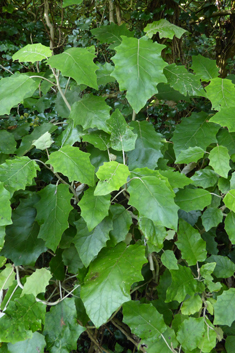
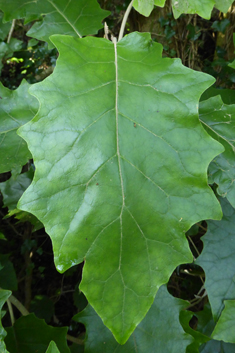
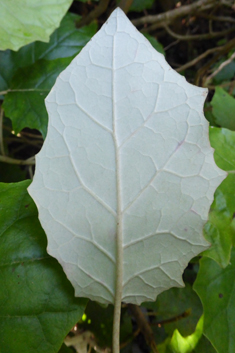
Hedge Ragwort Brachyglottis repanda
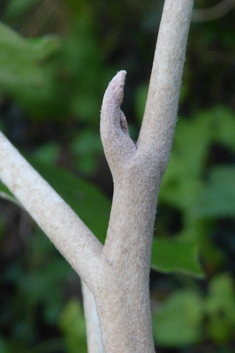
Introduced from New Zealand. Recorded at a handful of locations where probably always surviving after planting for hedging rather than spreading naturally. Flowers July to August. Often a rather open and shabby tree or large bush with sparse branches. Leaves large, to 25cm in length; leaf undersides and stems covered in dense white hairs.
 |
 |
 |
 |
| |
|
|
|
German-ivy Delairea odorata
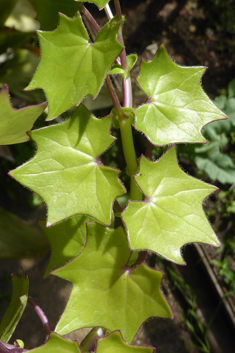
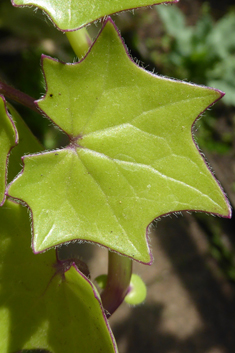
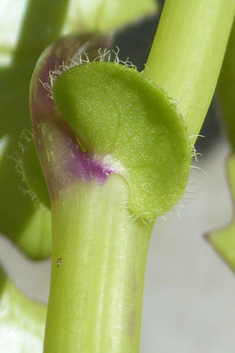
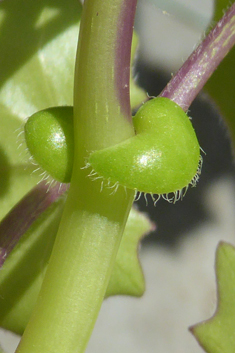
(Senecio mikanioides) Introduced from South Africa as a garden ornamental. Recorded from St Mary's, St Agnes and Tresco. Flowers June to September. A fleshy-leaved climber or scrambler. Flowerheads yellow without strap-like petals.
 |
 |
 |
 |
| |
|
|
|
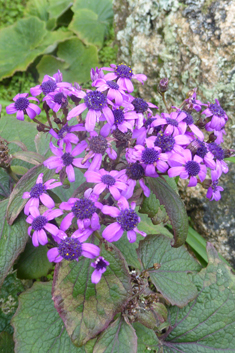
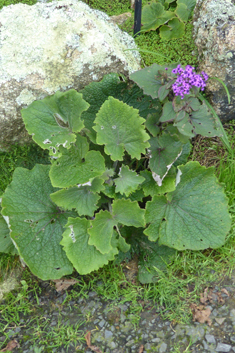
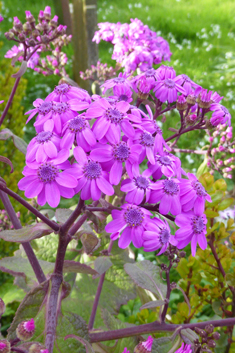
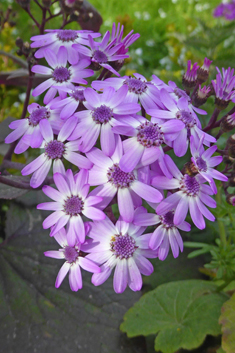
Cineraria Pericallis x hybrida
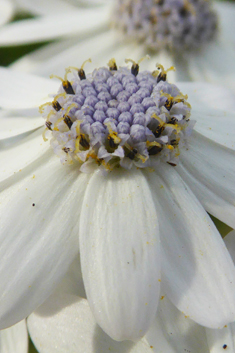
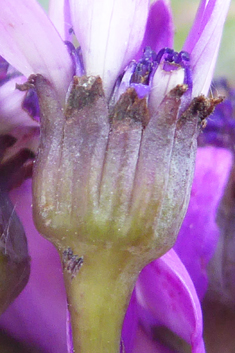
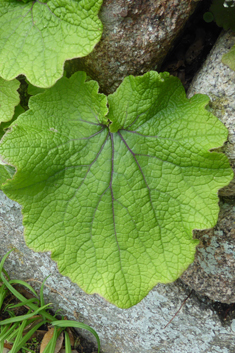
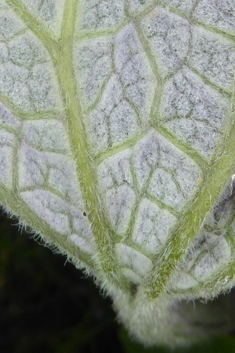
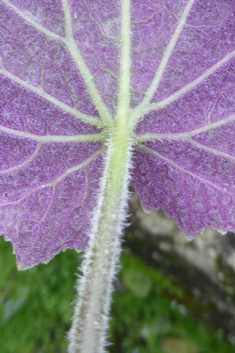
Hybrids of garden origin from plants imported from the Canary Islands. Quite widely recorded from St Mary's with a few records from Tresco and St Martin's. Flowers in various shades of purple, pink, mauve and white, sometimes bicoloured with white petal bases. Darker-flowered plants often have a purple tinge to the underside of the leaves.
 |
 |
 |
 |
| |
|
|
|
 |
 |
 |
 |
| |
|
|
|
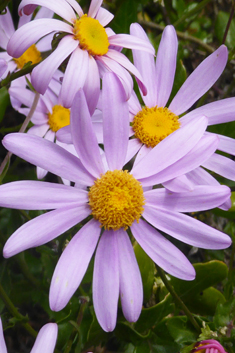
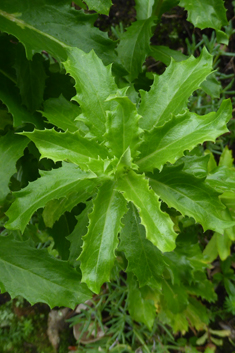
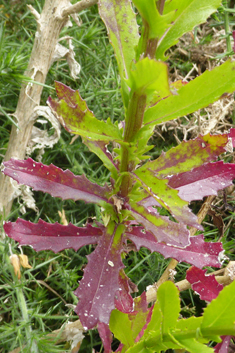
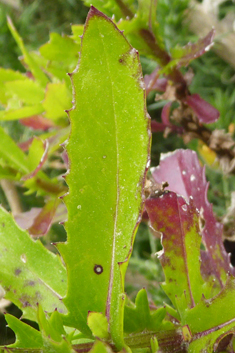
Woad-leaved Ragwort Senecio glastifolius
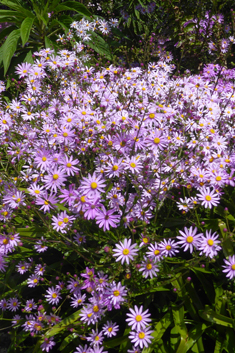
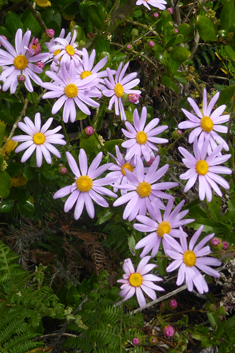
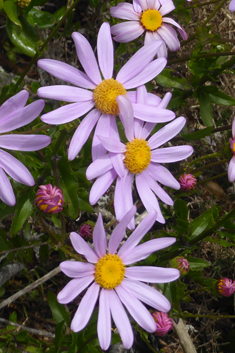
Introduced from South Africa as a garden ornamental. Increasing on Tresco with recent records also from St Mary's and St Martin's. A relatively tall plant, to a metre in height. Leaves unevenly and coarsely toothed.
 |
 |
 |
 |
| |
|
|
|
 |
 |
 |
 |
| |
|
|
|
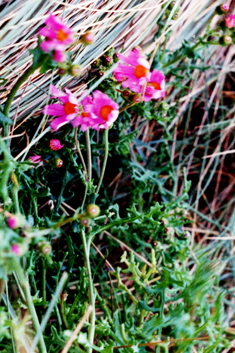
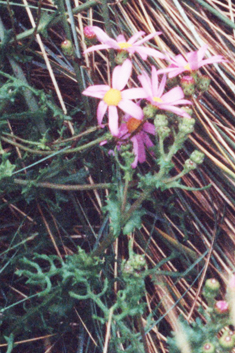
Purple Ragwort Senecio grandiflorus
Introduced from South Africa as a garden ornamental. Once recorded from St Mary's in the 1990s but did not persist. Flowers with pinkish-purple outer ligules. Leaves deeply dissected, like those of Common Ragwort or Groundsel.
 |
 |
| |
|
Common Fleabane Pulicaria dysenterica
Native but rare, with records from St Mary's and Tresco. Flowers August to September. A bushy, much-branched herbaceous perennial, forming spreading colonies of densely white-downy stems with deeply corrugated leaves.
 |
 |
 |
 |
| |
|
|
|
 |
 |
||
| |
|