Marigolds and Allies



What are they?
Marigolds and related plants form a group of often showy, yellow- or orange-flowered (sometimes other colours) members of the daisy and dandelion family - the Asteraceae. Their flowers differ from those of the dandelions in having strap-like petals or 'rays' around the outside of the compound flowerhead only, with the small florets in the centre being petalless and forming a button-like middle. These plants are annuals or herbaceous perennials and are often grown in gardens for their showy flowers, which can be produced throughout the summer. The plants tend to be multistemmed, while the flowerheads are mostly carried singly on long stems.
Where are they found?
Most are plants that are grown ornamentally and are most likely to be found as garden escapes or throw-outs on roadsides, waste ground or other grassy places. Corn Marigold is a weed of cultivated fields.
Identification
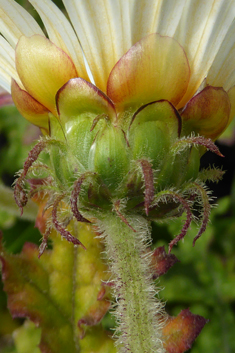
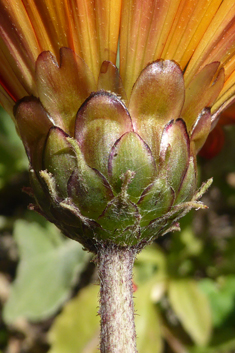
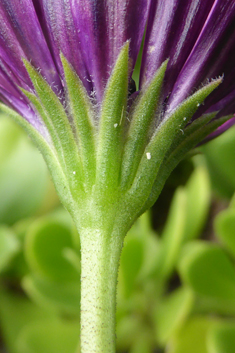
The flowers of this group can seem all rather similar at first, so it pays to make a note of leaf detail and to take a close look at the phyllaries (the green bracts around the base of the flowerhead), which should make identification relatively straight forward.
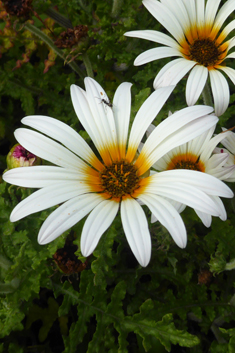
Rough Arctotis Arctotis aspera
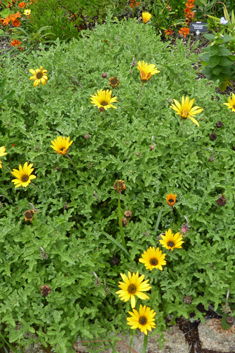
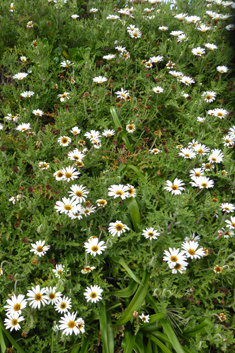
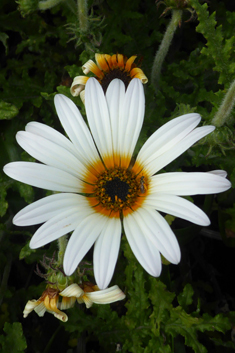
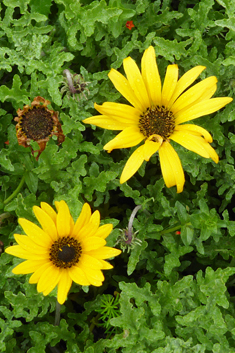
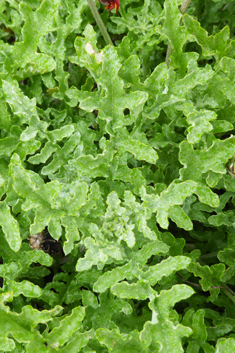
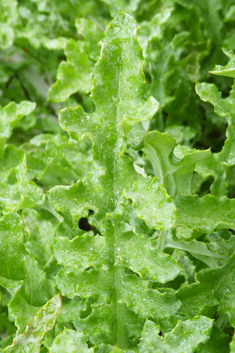
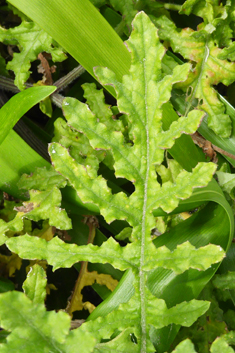
Introduced from South Africa as a garden ornamental. Flowers June to October. A perennial subshrub with coarsely toothed leaves. Flowers typically have white ligules with reddish undersides in the true species but cultivated plants may vary a little in flower colour.
 |
 |
 |
 |
| |
|
|
|
 |
 |
 |
 |
| |
|
|
|
Hybrid Arctotis Arctotis x hybrida
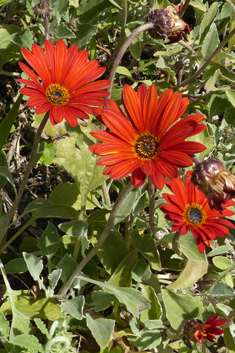
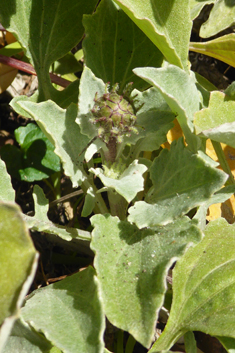
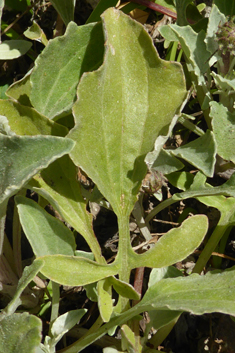
(Arctotis venusta x A. fastuosa) Introduced from South Africa and of garden origin. Flowers June to October. Garden hybrids with a wide range of flower colours. Leaves greyish with felted hairs.
 |
 |
 |
 |
| |
|
|
|
Plain Treasureflower Arctotheca calendula
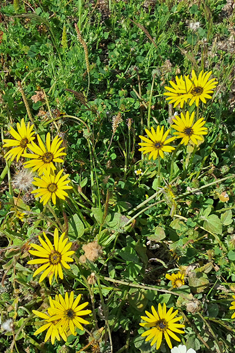
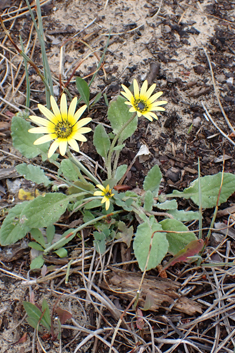
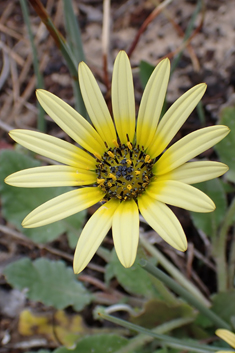
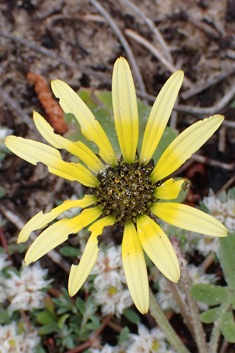
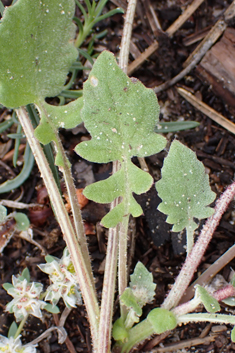
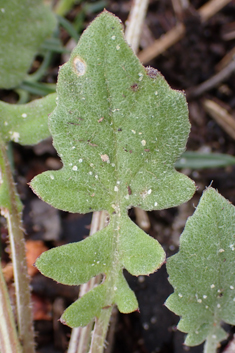
Introduced from South Africa as a garden ornamental and cultivated in gardens, from where it occasionally spreads. Flowers July to August. A low growing, annual or short-lived perennial with grey-green leaves. Flowers yellow to pale yellow, usually with a darker greenish or brownish underside to the ligules.
 |
 |
 |
 |
| |
|
|
|
 |
 |
||
| |
|
Treasureflower Gazania rigens
Introduced from South Africa as a garden ornamental and widely cultivated in gardens, from where it occasionally spreads. Flowers July to October. A low growing, spreading perennial with linear leaves that are dark, glossy green above and felted with dense white hairs beneath. The flowers are highly variable in colour, most often yellow or orange, with or without a darker centre, but white and shades of peach or pink - with or without darker stripes - are also grown.
 |
 |
 |
 |
| |
|
|
|
 |
 |
 |
 |
| |
|
|
|
Common Marigold Calendula officinalis
(Pot Marigold) A popular garden plant that self-seeds quite freely and has been recorded as a weed of urban environments and disturbed ground. Flowers June to October. The flowers may be yellow or - more often - orange and are 2-7cm across. Leaves are simple and unlobed, but often have strongly wavy edges. Seedheads are very distinctive, each curved seed looking like a small caterpillar!
| |
 |
 |
 |
| |
|
|
|
Field Marigold Calendula arvensis
Introduced from mainland Europe. Occurs as a bulbfield weed on St Mary's. Flowers May to August. The flowers are deep yellow (rarely orange) with the flowerheads 1-2cm across. Leaves are simple and unlobed, but often have strongly wavy edges. Seedheads are distinctive spiky.
 |
 |
 |
 |
| |
|
|
|
 |
 |
 |
 |
| |
|
|
|
Corn Marigold Glebionis segetum
An ancient introduction with cultivation that occurs on all the inhabited islands. Flowers June to September. All parts of the stems and leaves have a blue-green 'bloom' to them, which can be rubbed off with the thumb, like that on a grape or plum.
 |
 |
 |
 |
| |
|
|
|
Strawflower Xerochrysum bracteatum
Introduced from Australia as a garden ornamental and has been recorded from Tresco and St Martin's. Flowers July to September. The orange, fertile flowers that form the central disk are surrounded by 7-15 rows of bracts that harden and are very persistent. The outer (smaller) bracts are translucent, while the inner (larger) rows function as petals and may be white or any shade of yellow, through orange to red or pink. The persistent flowers make this a popular plant with flower arrangers.
 |
 |
 |
 |
| |
|
|
|
 |
 |
 |
 |
| |
|
|
|
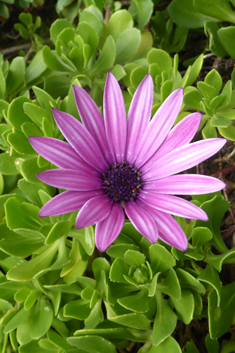
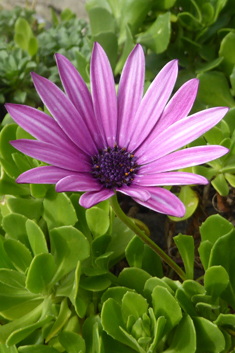
Cape Daisy Osteospermum jucundum
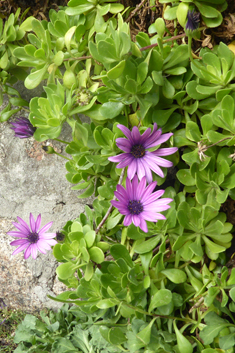
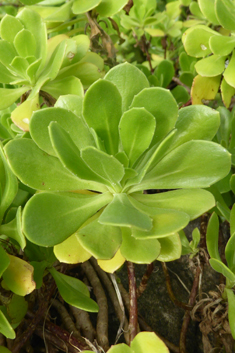
Introduced on the Isles of Scilly from South Africa and popular as a garden plant, from where it may spread into nearby road verges and track sides. Flowers throughout the warmer months. Plants for creeping, evergreen mats with slightly fleshy leaves. Flowerheads with pinkish-purple ligules which are usually a little darker below. The deeper purple 'Tresco Purple' is popular on the islands, but which may best be considered one of the hybrids rather than true D. jucundum.
(The taxonomy of this group bounces back and forth every few years between Osteospermum and Dimorphotheca. I'll try to stay consistent with the name used on the Plants of the World Online taxonomy, but the horticultural trade and most botany references still use Osteospermum).
 |
 |
 |
 |
| |
|
|
|
 |
 |
||
| |
|
Cape Daisy Hybrids Osteospermum cultivars
(Osteospermum cultivars) A very variable group of horticultural varieties, probably having both D. jucunda and D. ecklonis in their parentage. Currently popular cultivars are generally not frost-hardy, so do not persist where unattended, but are sometimes seen as garden throw-outs. They are typically more upright and bushy than Cape Daisy and have shorter leaves with strongly toothed or lobed margins.
 |
 |
 |
 |
| |
|
|
|
 |
 |
 |
|
| |
|
|