Forget-me-nots & Allies
What are they?
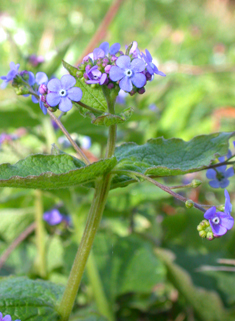
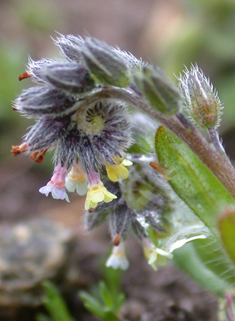
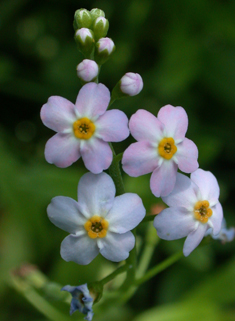
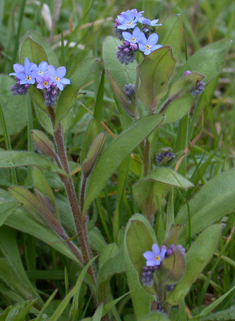
These are small to medium-sized, herbaceous perennials or annuals and are members of the borage family (Boraginaceae). Forget-me-nots are familiar flowers of spring and well known to many for their intensely blue flowers; they are commonly planted in gardens and - especially - in churchyards and cemeteries, but we have a number of native species that also flower through the summer. Most species have simple, rather coarsely hairy leaves and the flowers are typical of the family, being fused into a tube at the base and carried in curled spikes that gradually uncurl and elongate as the flowers mature in turn.
Where are they found?
Forget-me-nots and their larger relatives are popular as garden plants and can often be found on track sides, roadways and disturbed ground in urban areas as well as in churchyards and cemeteries. Our native species occur in a wide range of habitats from woodland and grassy places to arable land and water margins and the habitat type can often help towards determining the species.
Identification
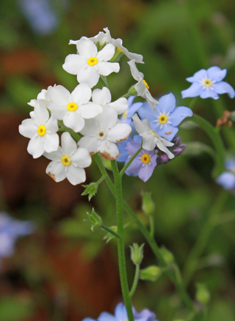
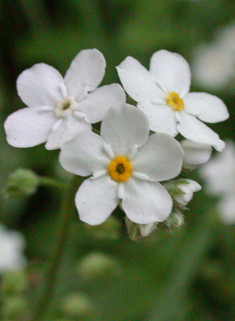
The vivid blue (sometimes pale yellow or white), five-petalled flowers with their tiny centres are generally rather easy to recognise as belonging to this group. Looking beyond the flowers, some of the larger species can be identified by their leaf shape, but our native forget-me-nots can be tricky and require careful checking of the hairs along with details of the calyx (the fused, green sepals that form the base of the flower). It is always worth remembering that the early season, curled flower spikes look very different to the elongated spikes that are present at the end of the flowering period. This feature is common to all forget-me-nots and the appearance of a plant will vary according to the stage of growth that it is in when it is found. Note that any of the species may at times have white flowers where the blue colour pigment is missing.
If you don't see your plant on this page, you might want to check some of the other members of the borage family by clicking here
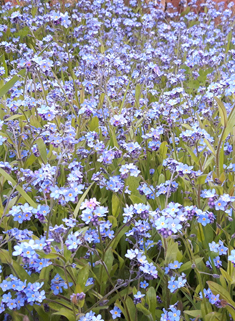
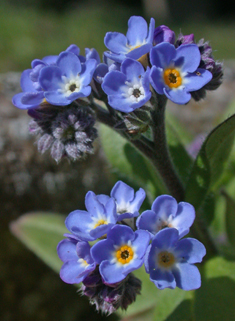
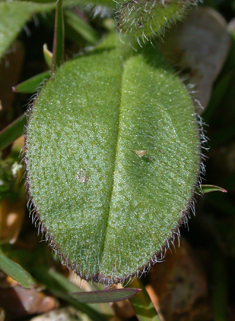
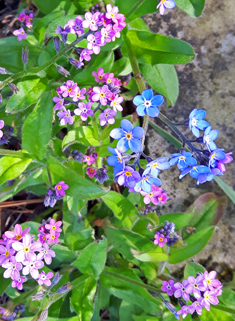
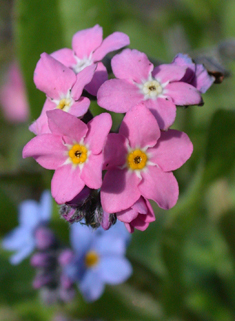
Wood Forget-me-not Myosotis sylvatica (cultivated forms)
Cultivated forms of our native Wood Forget-me-not are widely grown as a garden plant and may be commonly encountered in urban places along footpaths, in churchyards and similar places. Flowers April to early June. Plants to 50cm in height and typically well-branched. Flowers variable in size, typically 8-11mm across. Cultivated plants may be bright, sky blue, but pink or white flowers are also common. Generally larger and more showy than other forget-me-nots of dry habitats.
 |
 |
 |
 |
| |
|
|
|
 |
 |
 |
 |
| |
|
|
|
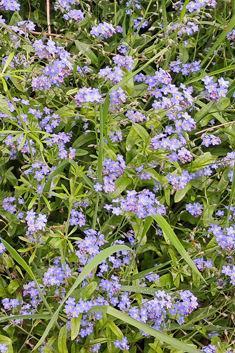
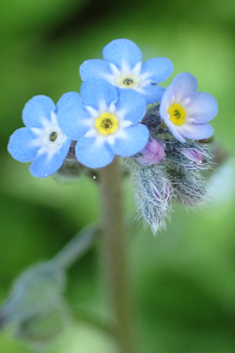
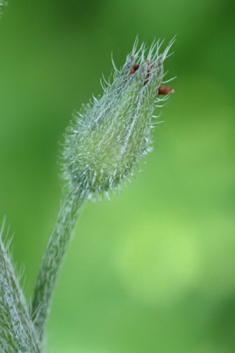
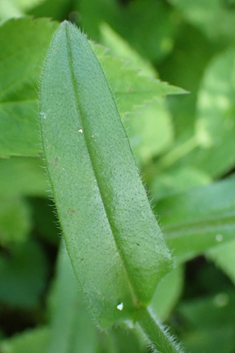
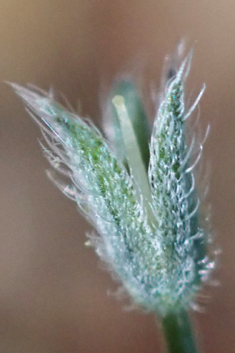
Wood Forget-me-not Myosotis sylvatica var. sylvatica
Native in woodland and shady places. Flowers April to early June. Plants to 50cm in height and typically well-branched. Flowers variable in size, 4-8mm across, typically bright, sky blue once fully open. Can be extremely difficult to tell from Field Forget-me-not. Hairs on calyx are similar in the two species, though Wood Forget-me-not seems to typically have fewer strongly hooked hairs and more of the longer, curved hairs. In fruit, the calyx lobes tend to remain slightly curved outwards at the tips, while those of Field Forget-me-not tend to curve in towards each other, concealing the seeds.
 |
 |
 |
| |
|
|
 |
 |
|
| |
|
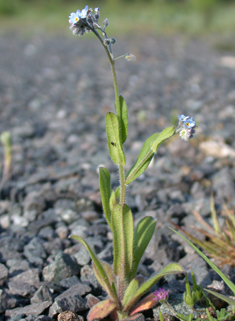
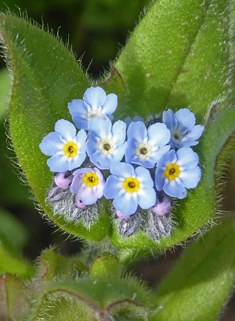
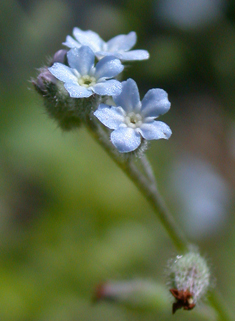
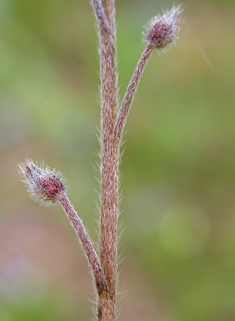
Field Forget-me-not Myosotis arvensis
Native. Very common throughout the region on disturbed ground in arable farmland and urban environments. Flowers April to September. Plants to 50cm in height and typically rather spindly. Flowers up to 5mm across, pale sky blue. Hairs on calyx spreading, stiff and hooked. Style shorter than the calyx tube; individual flower stalks at fruiting up to two times as long as calyx. Can be extremely difficult to tell from Wood Forget-me-not. Hairs on calyx are similar in the two species, though Field Forget-me-not seems to typically have more strongly hooked hairs towards the base of the calyx. In fruit, the calyx lobes tend to curve in towards each other, concealing the seeds, while those of Wood Forget-me-not tend to curve slightly outwards at the tips.
 |
 |
 |
 |
| |
|
|
|
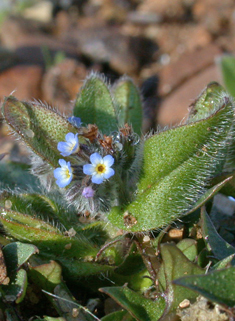
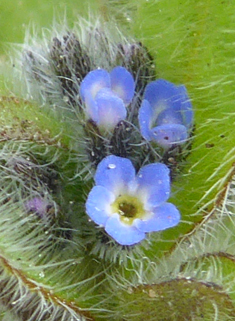
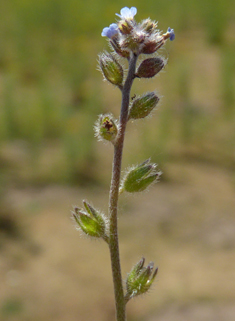
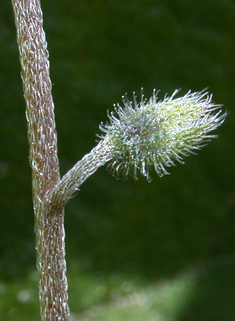
Early Forget-me-not Myosotis ramosissima
Native. Widespread on sandier soils on heaths and grassy banks. Flowers April to June. Plants to 25cm in height but often much less - just 2cm is typical on very dry sites. Flowers tiny, 3mm across, blue. Hairs on calyx spreading, stiff and hooked. Style shorter than the calyx tube; individual flower stalks at fruiting shorter than or as long as calyx.
 |
 |
 |
 |
| |
|
|
|
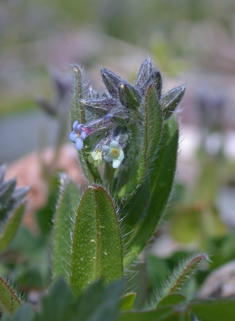
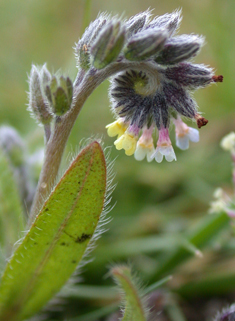
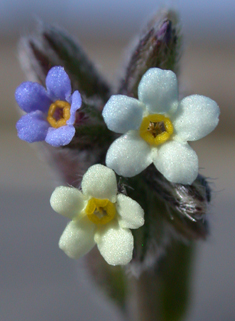
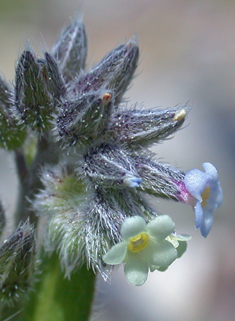
Yellow Changing Forget-me-not Myosotis discolor
Native. Widespread on sandier soils on heaths and grassy banks. Flowers late April to August. Plants to 30cm in height but often much less, especially on very dry sites. Flowers tiny, 2-4mm across, opening pale yellow and gradually changing through cream to blue as they mature. Hairs on calyx spreading, stiff and hooked. Style longer than the calyx tube; individual flower stalks at fruiting shorter than calyx. At least the upper stem leaves opposite each other.
 |
 |
 |
 |
| |
|
|
|
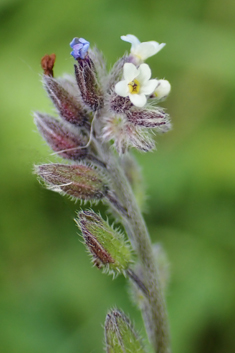
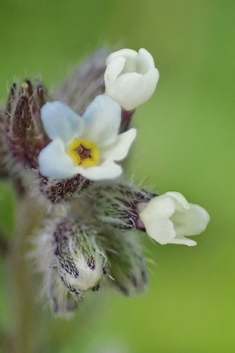
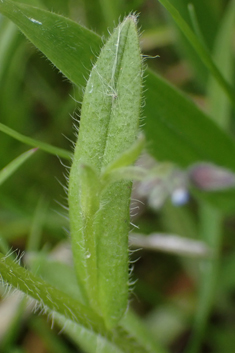
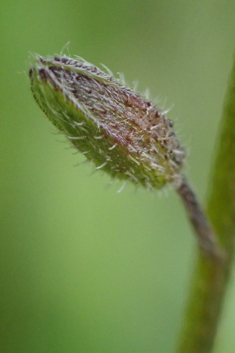
White Changing Forget-me-not Myosotis dubia
(Myosotis discolor subsp. dubia) Native. A plant of wetland areas, often found along track sides where they pass through fen habitats. Flowers late April to August. Plants to 30cm in height. Flowers tiny, 2mm across, opening white and gradually changing through pale cream to blue as they mature. Hairs on calyx spreading, stiff and hooked. Style longer than the calyx tube; individual flower stalks at fruiting shorter than calyx. All stem leaves alternate.
 |
 |
 |
 |
| |
|
|
|
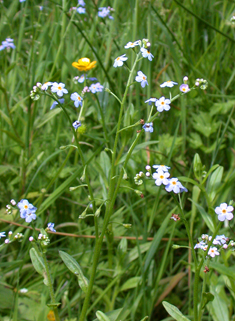
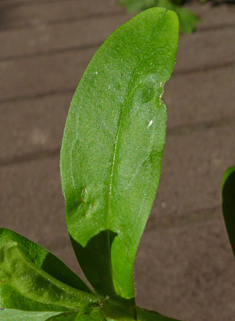
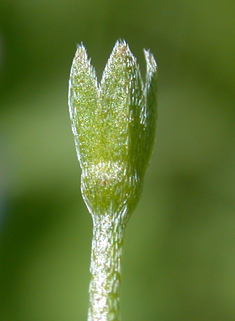
Water Forget-me-not Myosotis scorpioides
Native. Widespread and common in a wide range of wetland habitats including ditches, rivers, ponds and lakes. Flowers May to September. Plants to 70cm in height in tall vegetation, or less where growing in the open. Flowers relatively large, 8-13mm across, blue or rarely white. Hairs on calyx flattened, not hooked. Style longer than the calyx tube; calyx teeth as broad at the base as they are long and forming an equilateral triangle. Lower part of stem has hairs pressed to the stem, not spreading.
 |
 |
 |
 |
| |
|
|
|
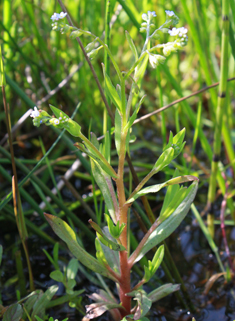
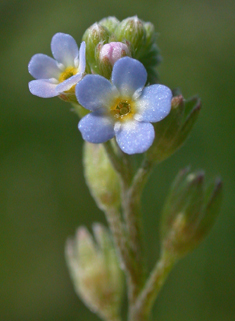
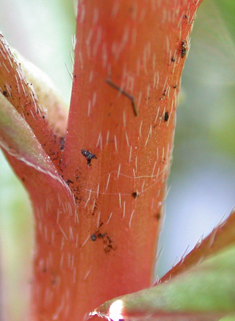
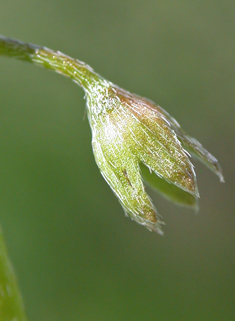
Tufted Forget-me-not Myosotis laxa
Native. Widespread in a wide range of wetland habitats but less common than Water Forget-me-not. Flowers May to August. Plants to 40cm in height. Flowers small, 3.5-4mm across, sky blue or rarely white. Hairs on calyx flattened, not hooked. Style shorter than the calyx tube; calyx teeth shorter across the base than they are long and forming an isosceles triangle. Lower part of stem has hairs pressed to the stem, not spreading.
 |
 |
 |
 |
| |
|
|
|
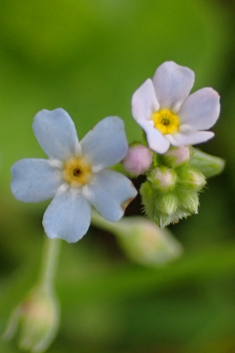
Creeping Forget-me-not Myosotis secunda
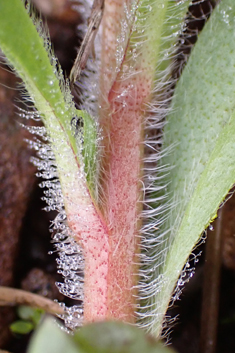
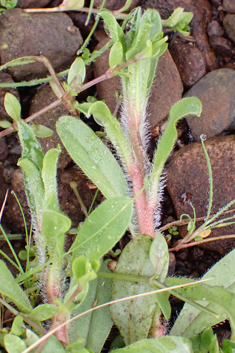
Native. A rare species in East Anglia with recent records only from a single wet heathland in North Norfolk. Flowers May to August. Plants 20-60cm in height. Flowers 4-8mm across, pale blue. Hairs on calyx flattened, not hooked. Style shorter than the calyx tube; calyx teeth shorter across the base than they are long and forming an isosceles triangle. Lower part of stem has spreading hairs, not appressed and the plant produces creeping stolons at the base.
 |
 |
 |
 |
| |
|
|
|
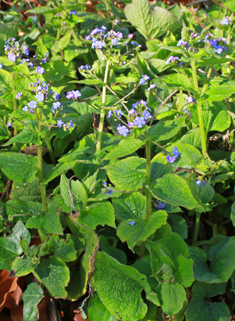
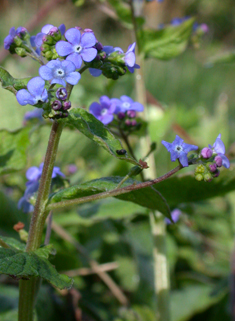
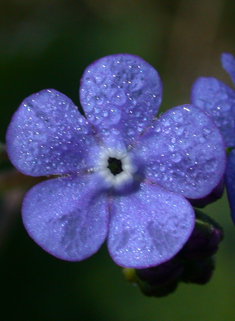
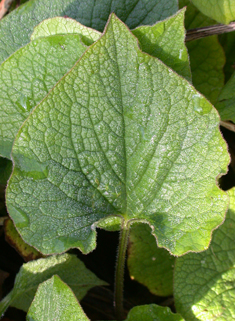
Great Forget-me-not Brunnera macrophylla
Introduced as a garden ornamental and recorded a handful of times as a garden escape. Flowers April to May. Similar to a chunky forget-me-not but with flowers a deeper blue and leaves broadly heart-shaped. Cultivated forms with 'frosted' leaves may sometimes be found as garden escapes.
 |
 |
 |
 |
| |
|
|
|
 |
 |
 |
|
| |
|
|
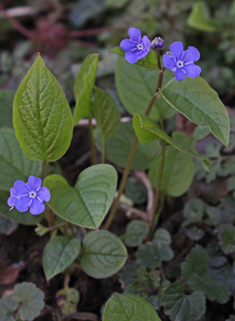
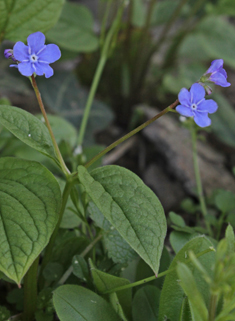
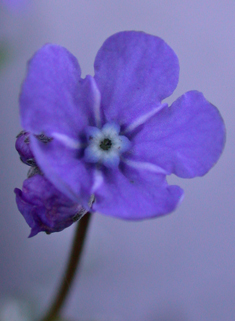
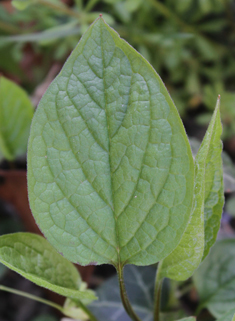
Blue-eyed Mary Omphalodes verna
Introduced as a garden ornamental and recorded just a couple of times as a garden escape. Flowers March to May. Spreads by creeping stolons to form low mats of foliage. Leaves broader than those of true forget-me-nots and with long petioles.
 |
 |
 |
 |
| |
|
|
|
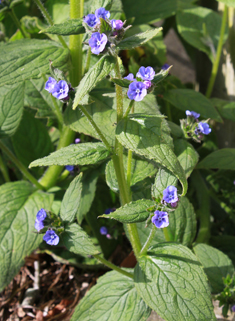
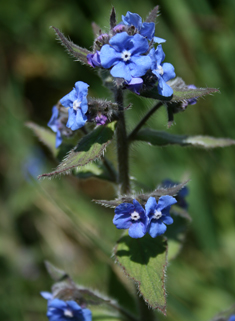
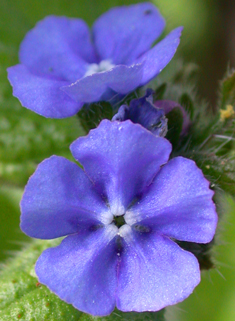
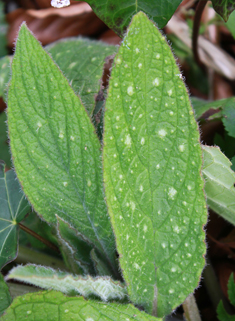
Green Alkanet Pentaglottis sempervirens
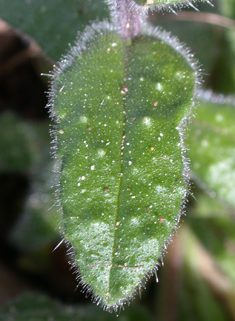
Introduced from mainland Europe for producing a red dye and perhaps also as a garden ornamental. Now widespread and often abundant in towns and villages along shady footpaths and hedgebanks. Spreads rapidly to form extensive colonies that smother other plants in the spring. Flowers April to July. Similar to other members of the family but regularly grows to a metre in height and has roughly bristly leaves and stems, the leaves often bearing whitish spots.
 |
 |
 |
 |
| |
|
|
|
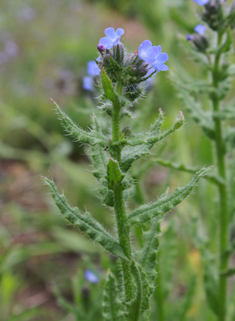
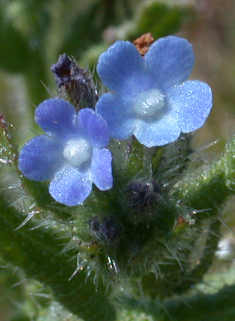
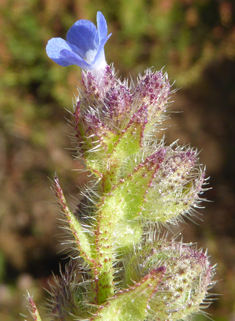
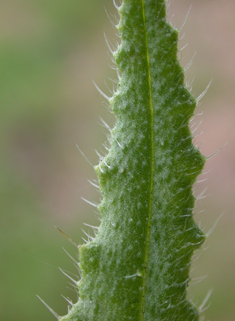
Field Bugloss Lycopsis arvensis
An ancient introduction, now widespread on lighter, sandier soils in cultivated ground. Flowers mostly May to September. Flowers are small and clustered towards the top of the stems. The whole plant is bristly hairy.
 |
 |
 |
 |
| |
|
|
|
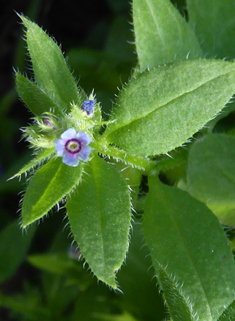
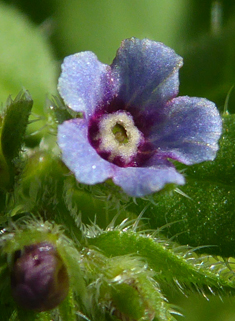
Madwort Asperugo procumbens
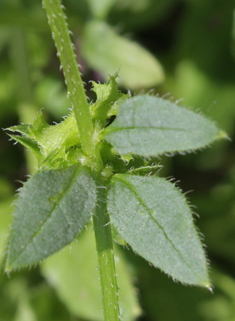
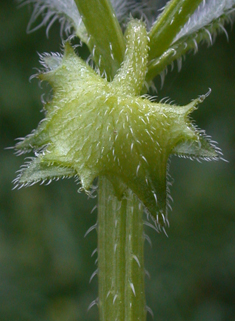
A rare introduction from mainland Europe, last recorded in East Anglia in 1980. Flowers June to August. A bristly plant with hooked hairs on the angled stems that allow it to scramble through other vegetation. Flowers tiny, blue with purple at the centre. The deeply lobed sepals persist after flowering and enlarge to envelope the developing nutlets.
 |
 |
 |
 |
| |
|
|
|
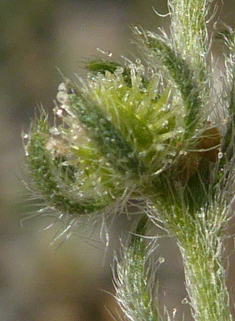
Bur Forget-me-not Lappula squarrosa
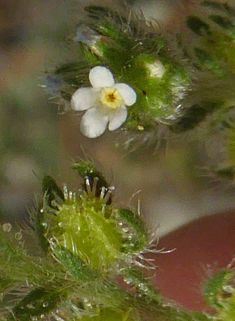
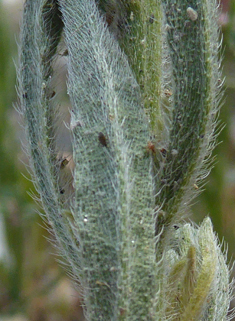
A very rare introduction from mainland Europe, last recorded in Suffolk in 1986. Flowers June to August. A small, bristly hairy plant, 10-60cm in height. Flowers tiny, 4mm across, pale blue or rarely white. Sepals long and linear, encircling the developing nutlets, which have two to three rows of spines on them.
 |
 |
 |
| |
|
|
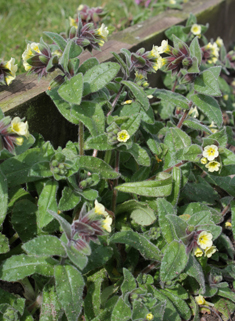
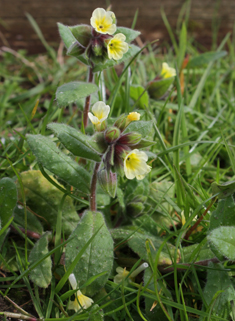
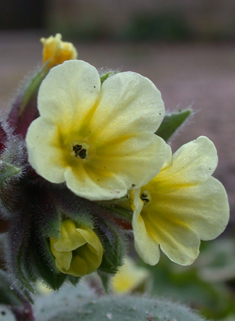
Yellow Nonea Nonea lutea
Introduced as a garden ornamental and occasionally found as a garden escape on roadsides and grassy places. Flowers April to June. A low, bistly hairy plant, 10-60cm in height and spreading to form leafy colonies. Flowers pale yellow, 6-10mm across. Leaves typically with pale bumps on the upper surface.
 |
 |
 |
 |
| |
|
|
|